Whale sharks in Indonesia: where and when to see them
Published ByMari LiveaboardSumbawaKomodoTriton Bay
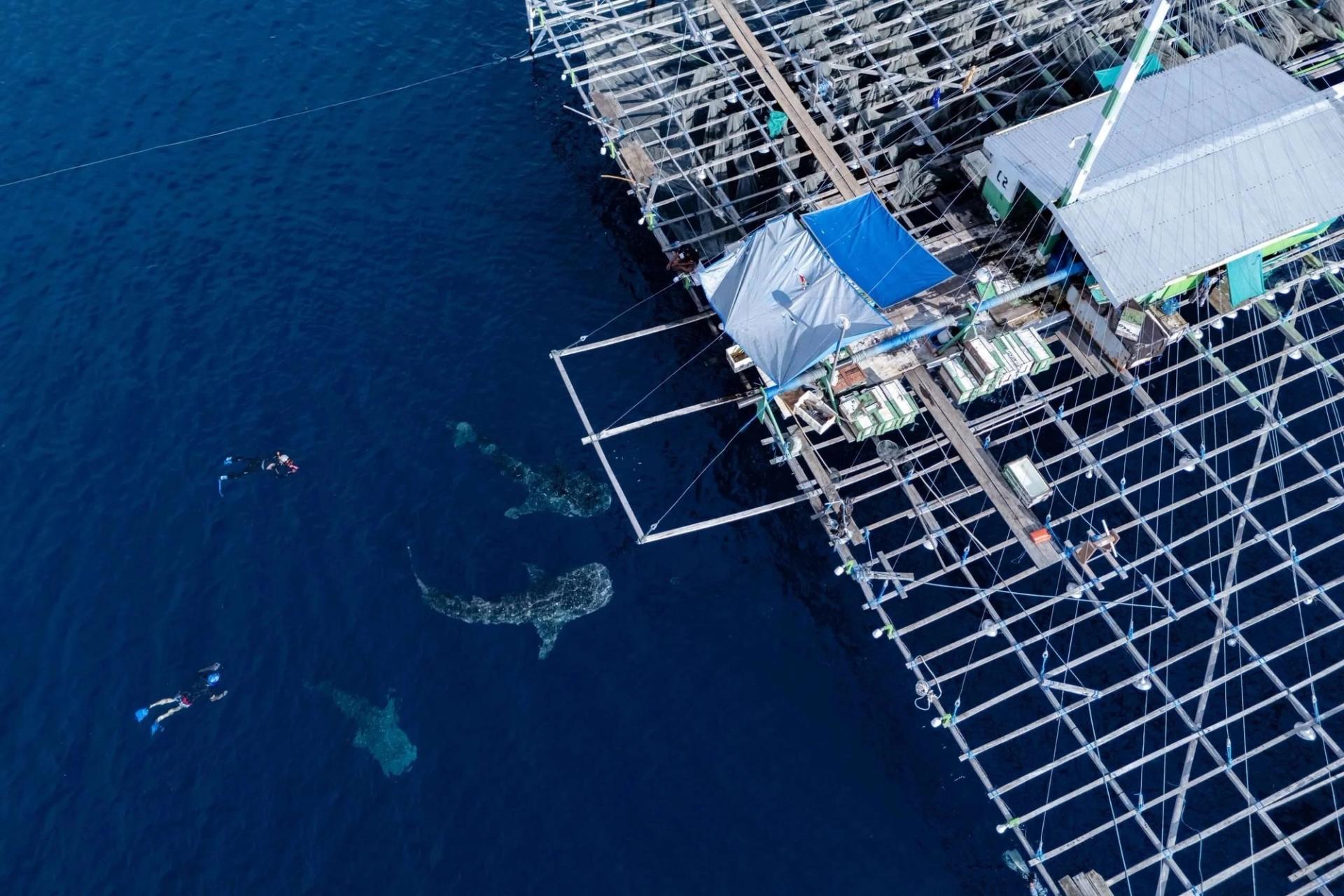
Whale sharks can be met in at least six regions of Indonesia, and the most dependable are Teluk Saleh on Sumbawa and Cenderawasih Bay in West Papua. Most encounters happen at bagans, the traditional fishing platforms that draw plankton and small fish, and the sharks that follow them. Mari reaches Teluk Saleh on selected cruises from May to September.
Quick answer: where and when to see whale sharks
| Location | Best months | How you meet them | Reliability |
|---|---|---|---|
| Teluk Saleh, Sumbawa | April to November | Bagan platforms, snorkel or dive | Very high in season |
| Cenderawasih Bay, West Papua | Year-round, calmest seas May to October | Bagan platforms, snorkel or dive | Very high |
| Triton Bay, West Papua | October to March | Namatote bagans, snorkel or dive | Seasonal, not guaranteed |
| Talisayan and Derawan, East Kalimantan | Year-round, calm-season mornings | Bagans at dawn, mostly snorkel | High when bagans are active |
| Botubarani, Gorontalo | Unpredictable | Close to shore, sharks are fed | Variable |
| Bentar Beach, Probolinggo | December to April | From a small boat | Low to medium |
| Raja Ampat, West Papua | No set season | Open water, by chance | Rare |
Every whale shark location in Indonesia
Teluk Saleh, Sumbawa
Teluk Saleh is one of the two most dependable places in the country. The bay is sheltered and rich in plankton, and resident sharks gather under the bagans most of the year. Fishermen lift their nets before dawn, and the sharks arrive to feed on what escapes. Encounters usually run from first light and can last more than an hour. Snorkeling gives the best view, and diving is possible depending on depth and positioning. This is where Mari sails, covered in detail below.
Cenderawasih Bay, West Papua
Along with Teluk Saleh, this is the most dependable place in the country. Sharks stay in the bay year-round and feed at the bagans around Kwatisore, often hanging almost vertically beneath the nets. Access is by flight to Nabire or Manokwari, then a multi-day liveaboard or a boat transfer of several hours. Seas are calmest from roughly May to October.
Triton Bay, West Papua
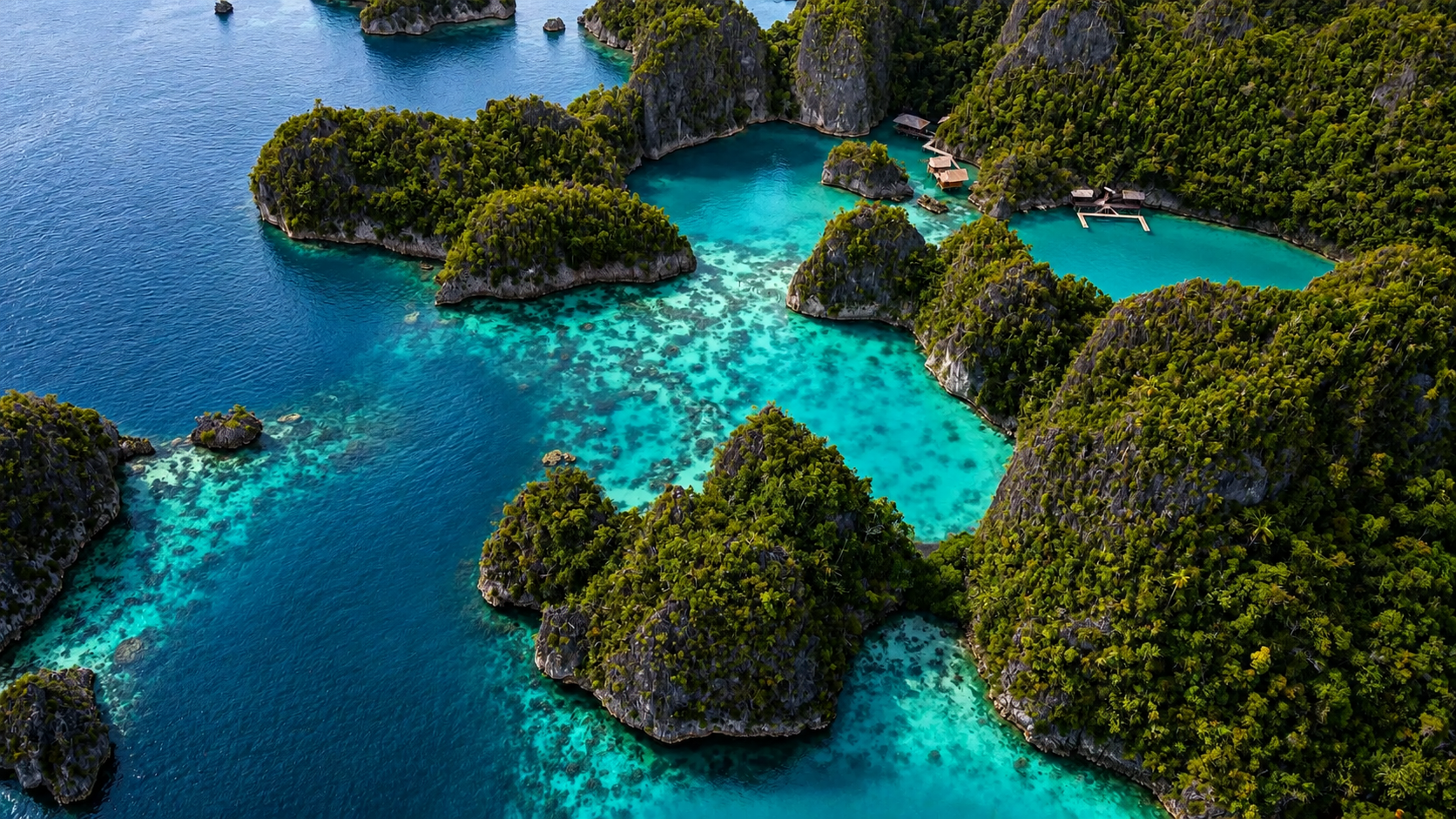
Off the Bomberai Peninsula near Kaimana, whale sharks feed under the bagans at Namatote, where ancient rock art also lines the limestone walls. Sightings depend on bagan activity, so timing and conditions decide the encounter. The bay is remote and few boats visit, which keeps sites uncrowded.
Talisayan and Derawan, East Kalimantan
Sharks feed around bagans in the early morning, using the same fishermen and plankton pattern as Teluk Saleh on a smaller scale. One operator source reports the platforms moving to Talisayan from mid-June to mid-September. Trips are chartered locally from the Derawan Islands. Boat traffic is light.
Botubarani, Gorontalo
Sharks come close to the beach here and can be reached by a short canoe ride. They can stay for weeks, then vanish for weeks or months. They are fed by locals, which changes natural behavior, so we suggest treating this stop as a curiosity rather than the reason for a trip.
Bentar Beach, Probolinggo
Sightings run from roughly December to April and vary a lot from year to year. Encounters are mostly from short boat trips, not long swims in clear water.
Raja Ampat, West Papua
Whale sharks pass through now and then, feeding in open water or near large islands. Sightings are rare and never guaranteed. Come for the reefs and treat a whale shark as a bonus.
The best time to see whale sharks in Indonesia
The sharks are not the limiting factor. Weather and bagan activity are. When seas are calm, fishermen work their platforms every night, the plankton keeps arriving and the sharks stay. In rough weather the platforms stop working and encounters become unreliable.
Pick your region by the month you can travel:
- May to September: Teluk Saleh. This is the dry season in the west, with calm seas and the best visibility.
- October to March: Triton Bay, when the bay is at its best for a liveaboard.
- Any month: Cenderawasih Bay, with calmest seas from roughly May to October.
Avoid Teluk Saleh from January to March. The rainy season brings rougher seas and fewer working bagans.
Whatever the region, plan for early mornings. Sharks usually arrive around first light when the nets are lifted. Sightings are wildlife-dependent and no encounter can be promised.
Whale sharks in Teluk Saleh, Sumbawa
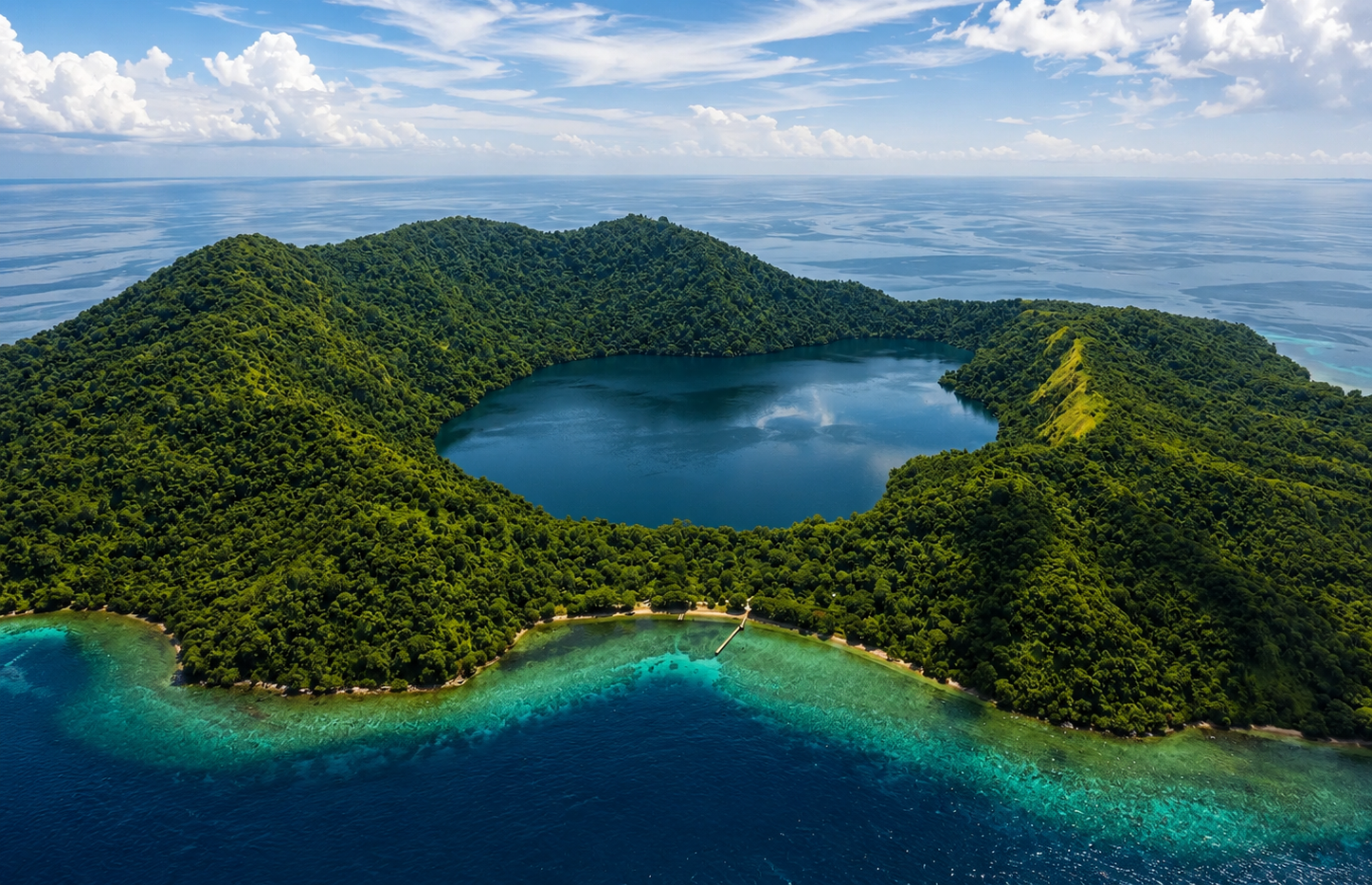
Teluk Saleh is a sheltered bay on the north coast of Sumbawa, calm where the reefs around nearby Moyo Island are exposed. Whale sharks are resident here and are present at the bagans from April to November. May to September is the sweet spot for a liveaboard, with dry weather, flat seas and the best visibility.
How an encounter works
- Fishermen light their bagans at night to draw in anchovies.
- Before dawn they lift the nets, and the plankton and small fish that escape pull in the sharks.
- The boat arrives at first light and works with local fishermen to find the platforms where sharks are feeding.
- Guests enter the water by snorkel or on scuba, depending on where the animals are and how deep they sit.
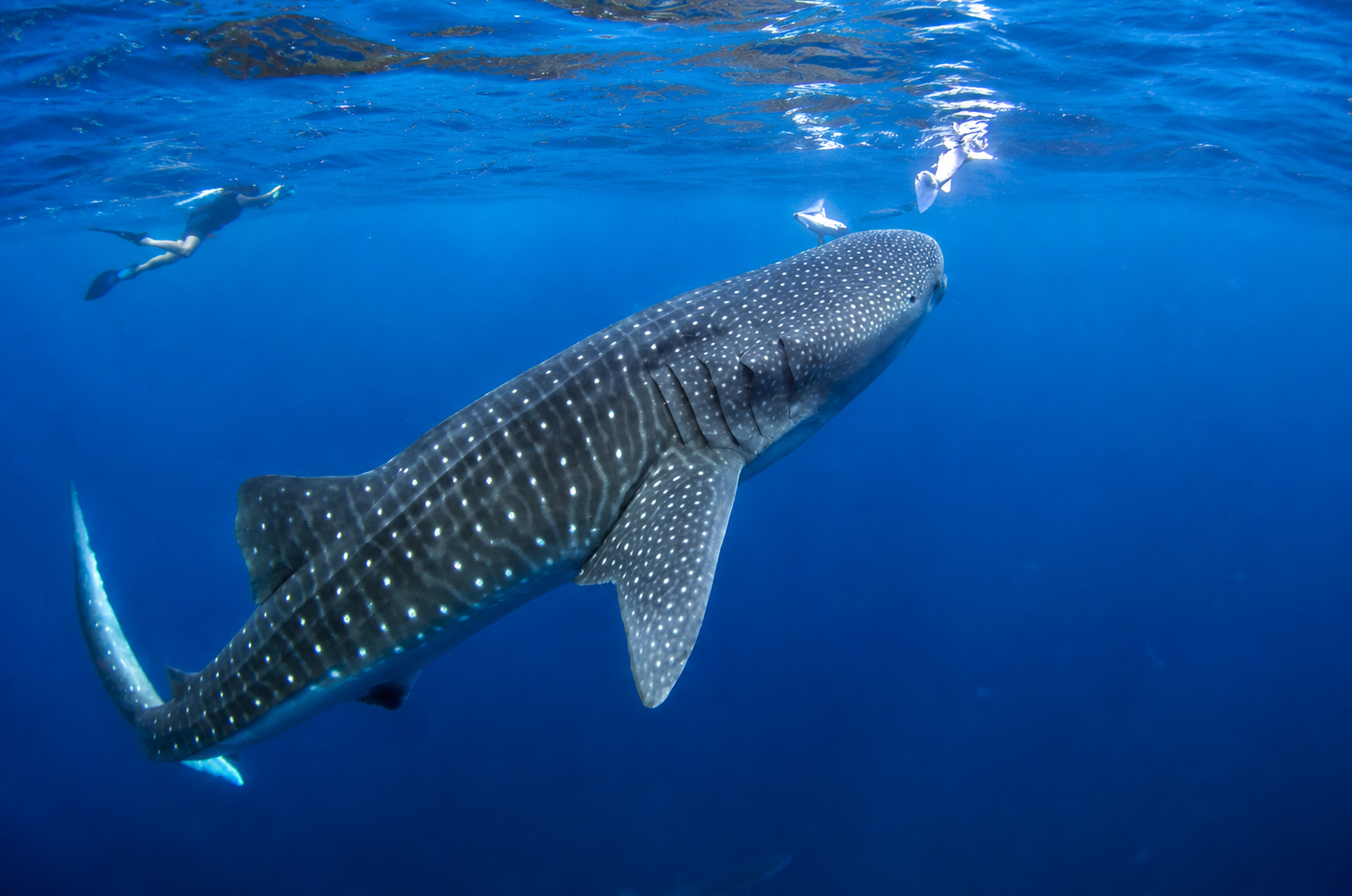
Snorkeling often gives the better view, because you float above the shark instead of below it. Local guides report groups of up to four or five sharks at one platform, and encounters lasting from 15 to 30 minutes to more than an hour. One local source documents a resident population of about 125 individuals, with animals commonly 6 to 8m (20 to 26ft) long.
What to know before you go
- A community built around the sharks: the bagans and the whale shark visits now support a local economy that many village families in the bay depend on. Your morning in the water helps keep that going.
- Early start: the sharks arrive when the nets are lifted before dawn, so the best encounters begin at first light. Mari is in the bay as the sun comes up.
- Gentle giants: whale sharks are filter feeders and harmless to people. Snorkelers and divers share the same encounter, so the whole group can take part.
Mari cruises through Teluk Saleh, May to September
From May to September, three Mari routes cross Teluk Saleh, and each one runs in both directions. All of them build the whale shark morning into a longer voyage along Indonesia's volcanic spine, so you also dive Moyo, Satonda, Sangeang, Banta and Komodo National Park on the same cruise.
| Cruise | Direction | Where Teluk Saleh falls |
|---|---|---|
| Bali to Labuan Bajo | Eastbound | Early, day 4 of the sample outline |
| Labuan Bajo to Bali | Westbound | Late in the cruise, after Komodo |
| Sumbawa Besar to Labuan Bajo | Eastbound | Opens the cruise |
| Labuan Bajo to Sumbawa Besar | Westbound | Late in the cruise, after Komodo |
| Bali to Maumere | Eastbound | Early in the cruise |
| Maumere to Bali | Westbound | Late in the cruise, day 9 of the sample outline |
On each cruise the whale shark stop is a full day: an early morning arrival in the bay, two sessions in the water with local fishermen, then an afternoon passage to the next island. Encounters alternate between snorkeling and diving depending on where the sharks are and how deep they sit.
Bali to Labuan Bajo, and the reverse
This route links Bali and Komodo, two of Indonesia's most legendary destinations, on one cruise. It opens with a check dive off Bali's volcanic east coast, then crosses to the Gili Islands of Lombok for reef sharks at Shark Point and Halik Reef. Moyo Island follows, with coral slopes and a jungle walk to Mata Jitu waterfall, before the overnight run into Teluk Saleh.
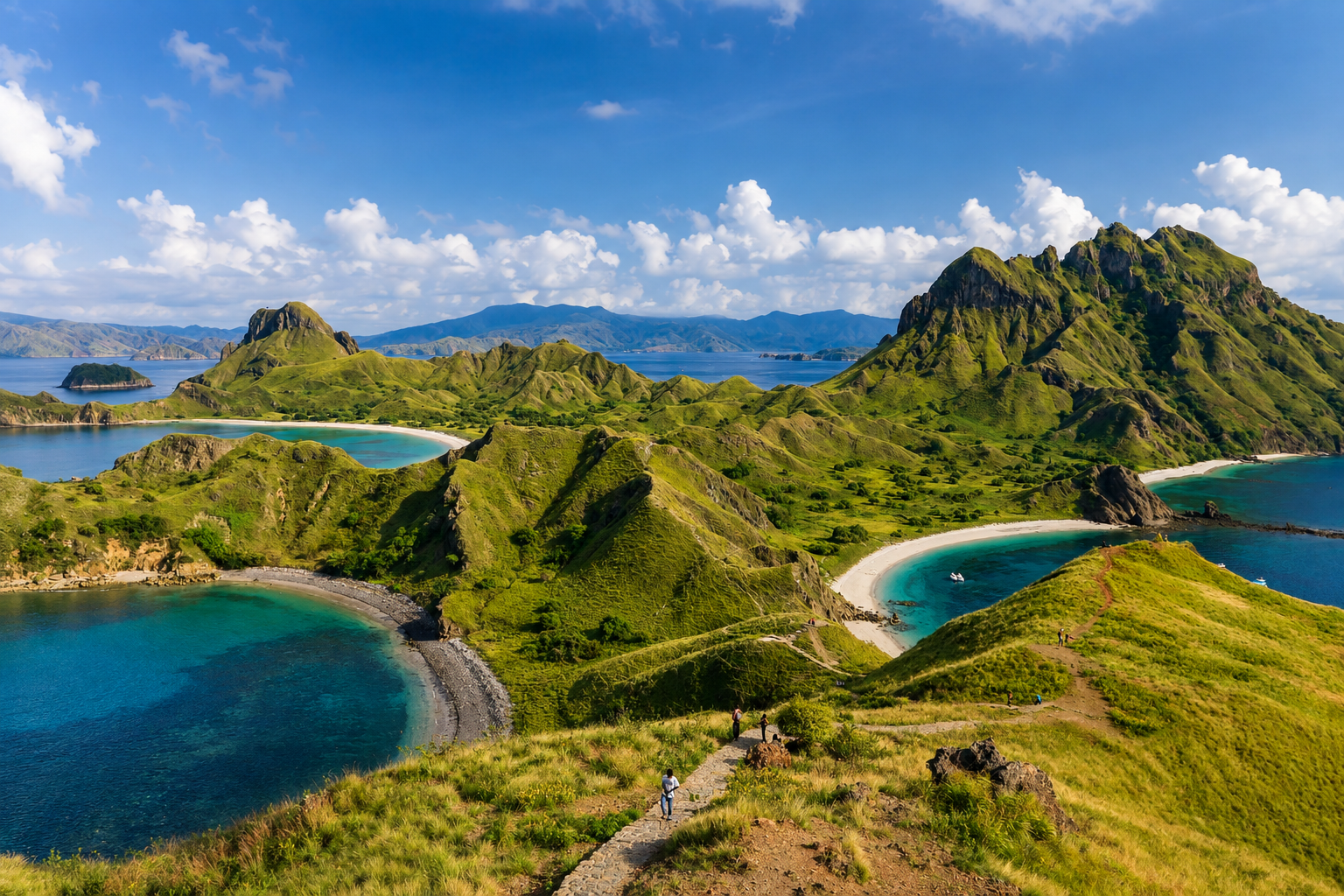
After the whale sharks the route continues to Satonda, a dormant volcano with a crater lake, a flying fox colony and a night dive. Sangeang's black-sand reefs and Banta's current-swept slopes lead into Komodo, with a dragon trek, a Padar hike and the pinnacles of Castle Rock and Batu Bolong. Run in reverse, the cruise starts with Komodo and finishes with the whale sharks, volcanic reefs and the Gili Islands before Bali.
Sumbawa Besar to Labuan Bajo, and the reverse
This is the most whale shark-focused route. Mari embarks at Badas harbor, the gateway to Sumbawa Besar, so you reach the bay without a long transfer from Bali. Eastbound, the cruise opens with whale shark encounters and volcanic island reefs before building toward Komodo. Westbound, Komodo's high-voltage diving comes first and the cruise gradually eases into whale sharks, black-sand volcanoes and a quiet waterfall walk, ending at Badas.
Bali to Maumere, and the reverse
This route runs from Bali to Flores and takes in the full sweep of Komodo National Park in between. Westbound from Maumere, it starts at the volcanic island of Palue, crosses Komodo, then heads west across Banta, Sangeang and Moyo into Teluk Saleh. Satonda and the Gili Islands follow before the cruise ends in Bali. Eastbound, the whale sharks come early, and Komodo and Flores make up the second half.
A fourth route, Sumbawa Besar to Maumere, also crosses Teluk Saleh in the same months. It opens with the whale sharks, runs through Komodo and ends among the volcanic reefs of Flores.
Plan your whale shark cruise
- Browse the routes and dates on the Mari Sumbawa page.
- See the upcoming Sumbawa departures.
- Check schedule and rates for exact dates, length and prices.
Confirm the embarkation and disembarkation ports before you book flights, as the direction of a route can change by departure. The routes above are sample outlines. The captain and cruise director adapt the daily plan to weather, tides, national park directives and the safety and comfort of guests. Whale shark sightings are never guaranteed.
Meeting whale sharks responsibly
Whale sharks are listed as endangered on the IUCN Red List, so how you behave in the water matters. The same simple rules apply at every location:
- Do not touch the shark or ride it.
- Keep at least 3m (10ft) from the body and 5m (16ft) from the tail.
- Do not use flash.
- Never block the path of a shark or swim under it. Give way if it approaches.
- Enter the water calmly and follow the time limits and instructions of your guide.
- Keep to no more than two boats per shark.
It is also worth asking any operator how they run their encounters. Choose trips that observe passively, limit the number of swimmers in the water and brief guests before the first entry.
Frequently asked questions
Where is the best place to see whale sharks in Indonesia?
Teluk Saleh on Sumbawa and Cenderawasih Bay in West Papua are the two most dependable. Teluk Saleh is the best choice for May to September and is easier to combine with Bali and Komodo. Cenderawasih Bay has sharks year-round but takes a longer journey to reach.
Can you dive with whale sharks in Indonesia or only snorkel?
Both are possible at the bagan sites. Snorkeling often gives the better view because you float above the shark, and Mari alternates between snorkeling and diving depending on where the sharks are and how deep they sit.
What is the best month for whale sharks in Teluk Saleh?
April to November is the strong window, and May to September is when Mari sails the bay. Avoid January to March, when seas are rougher.
Are whale shark sightings guaranteed?
No. Whale sharks are wild animals, and sightings depend on the animals, the bagans and the conditions.
Which Mari cruises go to Teluk Saleh?
Bali to Labuan Bajo, Sumbawa Besar to Labuan Bajo and Bali to Maumere, each in both directions, from May to September. Sumbawa Besar to Maumere also stops there.
Do I need to be a certified diver to see whale sharks?
Not necessarily. Many encounters are done by snorkel from the surface. Check the certification requirement of your cruise before you book.
Ready to meet the whale sharks of Teluk Saleh? Write to info@mari-liveaboard.com and we will help you pick a cruise.